



Rich Results Preview
Paste JSON-LD or page HTML and see exactly how Google would render the rich result — plus a validation pass against Schema.org vocabulary and Google's required fields. Runs in your browser; no uploads.
Input
Ready.
Used as the URL shown in the SERP preview.
Search preview
No schemaValidation report
Structured data
What rich results actually do
Structured data is markup, usually JSON-LD, that tells search engines what a page is about in machine-readable terms. When Google recognizes the right shape — a Product with an offer, an Event with a date, a Recipe with ingredients — it can promote the link from a plain blue result to a richer card with images, ratings, prices, or interactive elements.
Google's official Rich Results Test only checks the schema types it currently supports for rich snippets. This tool validates against the full Schema.org vocabulary and flags misspellings, superseded terms, and unexpected properties. It previews the SERP rendering too, so you can iterate on markup before it ever leaves staging.
Higher CTR
Star ratings, prices, and images draw the eye and lift click-through over plain results — often by double digits.
Eligibility, not guarantee
Valid markup makes a page eligible for rich results. Whether Google actually shows them depends on quality and intent.
Catch errors early
Required fields, type mismatches, and bad date formats are the most common reason rich results never appear.
Schema beyond Google
Bing, DuckDuckGo, Pinterest, and AI assistants all parse Schema.org. Validating broadly future-proofs your pages.
Faster iteration
Preview before shipping — see the rendered card next to the markup so you can tune copy, images, and ratings.
No backend needed
Everything runs in the browser. Paste, validate, preview, copy — your markup never leaves your machine.
Tools
More marketing tools
Tools and content carefully crafted by Hire Digital especially for you
SEO
llms.txt Generator
Generate an llms.txt file for your site — the Markdown index that tells ChatGPT, Claude, and Perplexity what your pages are. Crawls your sitemap and builds a clean index from your real page metadata.

Design
QR Code Generator
Generate clean, scannable SVG QR codes from any URL or text. Add a logo, customize colors, eyes, and module shape, then download as SVG or PNG.
Marketing
Image Compressor
Compress and optimize JPG, PNG, and WebP images right in your browser using MozJPEG, libwebp, and OxiPNG. Reduce image file size without losing quality — no upload, no server.
SEO
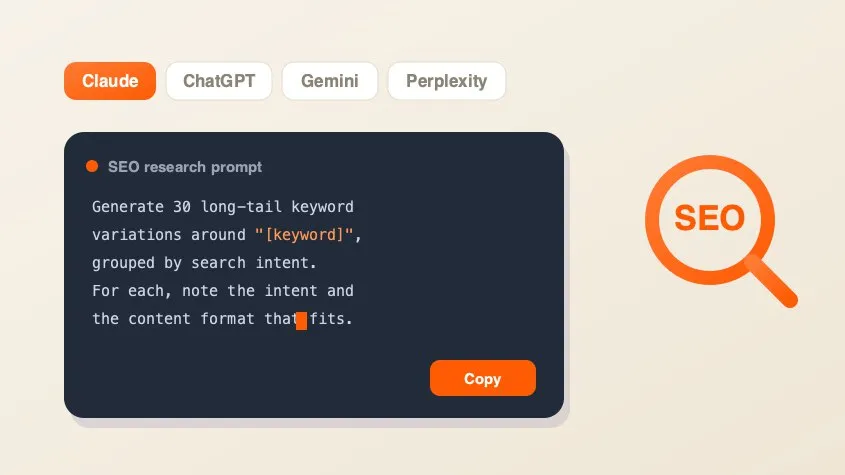
SEO AI Prompt Cheatsheet
A free library of copy-paste AI prompts for SEO research — keyword research, search intent, content briefs, competitor gaps, and metadata. Tailored for Claude, ChatGPT, Gemini, Perplexity, or Grok and filled with your keyword.
Marketing
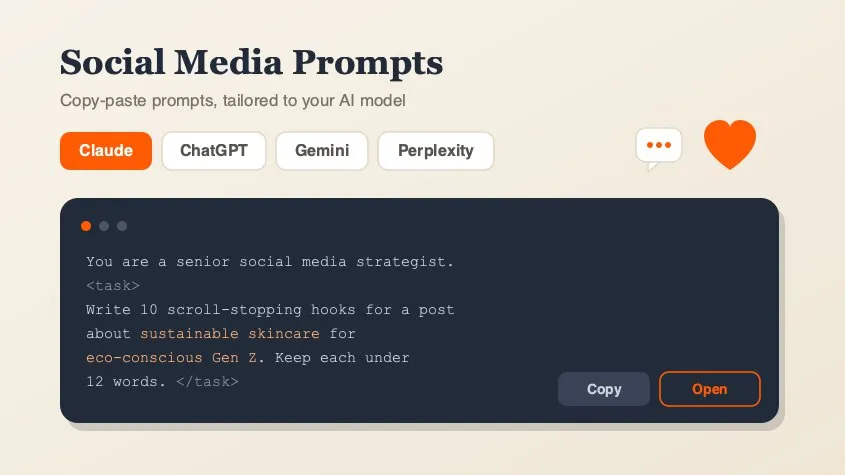
Social Media Marketing Prompt Generator
A free library of copy-paste AI prompts for social media marketing — post ideas, hooks, captions, hashtags, platform playbooks, content calendars, ad copy, analytics, and workflow loops. Tailored for Claude, ChatGPT, Gemini, Perplexity, or Grok and filled with your topic. Open any prompt in your AI tool in one click.

Design
Background Remover
Remove backgrounds from photos using an on-device AI model. Drop in a JPG, PNG, or WebP and get a transparent cutout in seconds. Nothing is uploaded.
Marketing
PDF Compressor
Compress and optimize PDFs in your browser by recompressing embedded images with MozJPEG. Reduce PDF file size for scans, presentations, and image-heavy documents. Files never leave your device.
Marketing
PDF Merger
Merge and combine multiple PDF files into one document, right in your browser. Reorder files before merging — lossless quality, no upload, no signup, no watermarks.